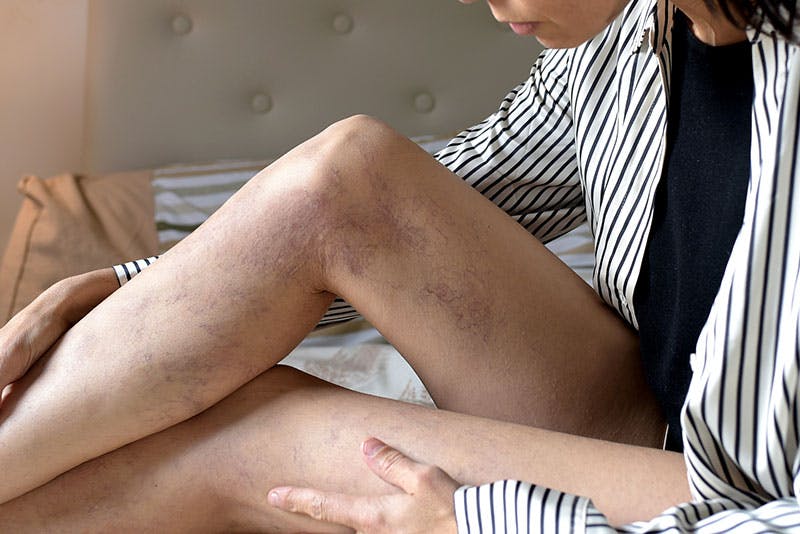
Spider veins—those thin, web-like blue, purple, or red veins that appear on the surface of the skin—are often brushed off as just a cosmetic issue. Many people think they’re simply an “aesthetic nuisance” that comes with age or genetics. While it’s true that spider veins can affect how confident you feel in shorts, dresses, or swimsuits, the story doesn’t end there.
Spider veins can actually be a visible warning sign of underlying vein disease. In many cases, they develop because of increased pressure in the leg veins due to weak or leaky valves. This condition, known as venous reflux, prevents blood from flowing efficiently back to the heart. Over time, this pressure forces smaller surface veins to expand and become visible as spider veins.
Here’s why that matters:
- Spider veins may signal early chronic venous insufficiency (CVI), which can worsen if left untreated.
- They can sometimes be associated with leg pain, burning, itching, or heaviness—not just appearance.
- If ignored, they may progress into larger varicose veins or even lead to skin changes, swelling, or ulceration over time.
The good news? Treatment for spider veins is simple, effective, and minimally invasive. Sclerotherapy, the most common approach, involves injecting a safe solution directly into the veins, causing them to collapse and fade from view. Other options include laser treatments for smaller surface veins. These procedures are quick, performed in-office, and require little to no downtime.
So, while spider veins may seem like “just cosmetic,” they deserve attention. Taking the time to have them evaluated ensures you’re not only improving your appearance but also protecting your long-term vascular health.
Ready to treat your spider veins? Schedule your complimentary vein evaluation by calling our office at 813-533-1999 today.