Sweating is a natural and necessary function of the body. However, for some people, sweating becomes excessive and difficult to control.
This condition, known as hyperhidrosis, can affect confidence, social interactions, and everyday comfort.
For patients whose symptoms do not improve with antiperspirants or medications, Botox may offer an effective solution.
What Is Hyperhidrosis?
Hyperhidrosis occurs when the body produces more sweat than is necessary for temperature regulation.
Common areas affected include:
- Underarms
- Palms of the hands
- Soles of the feet
- Face
People with hyperhidrosis may experience sweating even when they are not hot or exercising.
The International Hyperhidrosis Society estimates that millions of people worldwide experience excessive sweating severe enough to impact daily life.
How Botox Reduces Sweating
Botox works by blocking the nerve signals that activate sweat glands.
When these signals are interrupted, the sweat glands in the treated area become less active. This results in significantly reduced perspiration.
Because Botox works locally, it affects only the treated area rather than the entire body.
Treatment Process
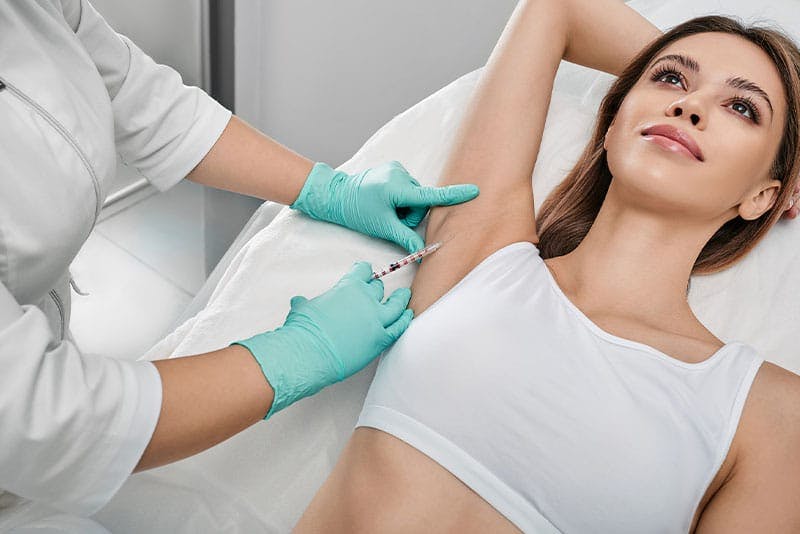
The procedure involves a series of small injections placed just beneath the skin in the affected area.
Most treatments take about 20–30 minutes.
Patients can typically return to normal activities immediately afterward.
Results and Duration
Sweating reduction usually begins within 1–2 weeks after treatment.
Results can last 4–6 months, and sometimes longer depending on the individual.
Many patients choose to repeat treatment once or twice per year to maintain results.
When to Consider Botox for Sweating
Botox may be recommended when excessive sweating interferes with work, social situations, or quality of life.
For example, patients may struggle with:
- Visible sweat stains on clothing
- Difficulty shaking hands
- Slippery grip during activities
- Constant need to change clothing
Reducing excessive sweating can significantly improve confidence and comfort.